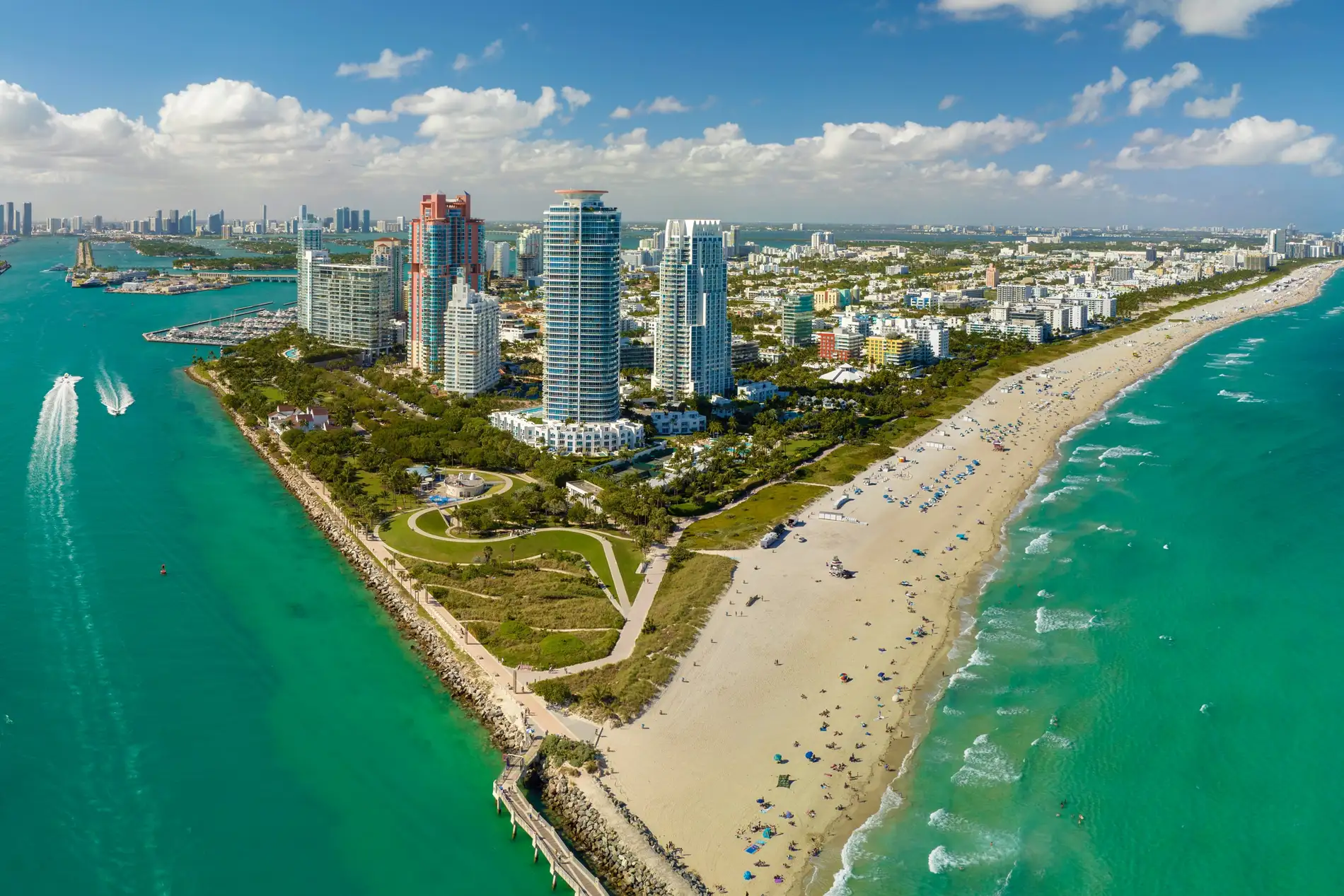
For the people who actually fly private, Saint-Tropez is the most demanding short-haul charter destination in the Mediterranean. The runway is short, the season is short, the noise rules are strict, and the alternative airports all involve trade-offs. A practical guide to flying into the Riviera in 2026.
1. Why Saint-Tropez Is a Private Jet Story
Saint-Tropez is not the largest private jet destination in Europe. By aircraft movements it is dwarfed by Nice, Geneva, and Paris. By yacht count it is challenged by Monaco, Antibes, and the shipyards of La Ciotat. What it is — uniquely — is the most concentrated private aviation destination in the world for what it offers per square kilometer.
A 12-week window every summer, a single regional airport with a 1,180-meter runway, and a customer base that includes the wealthiest families in Europe, the Gulf, the US, and (until recently) Russia. The airport handles roughly 8,000 aircraft movements a year, almost all between mid-May and mid-September, almost all by turboprop or very light jet, and almost all to a destination that the airport was never technically designed to serve.
That mismatch — between the demand and the infrastructure — is the reason a Saint-Tropez private jet trip requires more planning than almost any other European destination. The runway is short. The airport is small. The noise quotas are tight. The customs season is limited. The summer is compressed. And the alternatives — Nice, Cannes-Mandelieu, Toulon-Hyères — all involve either a longer drive or a helicopter transfer.
If you fly private to the Riviera in summer, you will at some point either land at La Môle, or wish you had understood why you couldn’t.
This guide is built to make sure you do it right the first time.
2. The Geographic & Strategic Case
Saint-Tropez sits on a peninsula on the southern French Riviera, between Toulon and Cannes, roughly 100 km west of Nice and 60 km southeast of Marseille. It is technically a small fishing village turned into one of the most concentrated concentrations of wealth in the Mediterranean. The peninsula of Saint-Tropez is about 11 km long; the commune itself is around 11 km². The town has fewer than 5,000 permanent residents. In July and August the population swells to perhaps 50,000, of whom a substantial share are UHNW travelers, family offices, and the people who work for them.
What makes Saint-Tropez different from other Riviera destinations is the intensity per square kilometer. Cannes has the film festival, Monaco has the Grand Prix and the casino, Antibes has the yacht show. Saint-Tropez has the beach, the village, the harbor, and a summer social calendar that brings the same audience back year after year with remarkable consistency.
Three structural factors drive the private jet traffic:
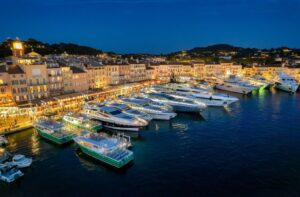
1. The harbor. The Vieux Port de Saint-Tropez is one of the most famous yachting destinations in the world, lined with cafés (Sénéquier is the icon) and packed with superyachts from June through September. The yacht owners arrive, almost without exception, by private jet. The air-to-yacht handoff at Saint-Tropez — taxi from the FBO to the Vieux Port, often under 30 minutes — is among the most operationally elegant in the world when the conditions cooperate.
2. The beach. Pampelonne is the most famous beach in Europe, a 5 km stretch of white sand lined with beach clubs — Club 55, Nikki Beach, Bagatelle, Loulou, Verde, Indie Beach. The beach clubs turn over the entire social calendar of the summer between them. Most of the principals who book a table at Club 55 for a long Saturday lunch have flown in that morning.
3. The events. The Cannes Film Festival (mid-May) brings a parallel private jet audience that uses Saint-Tropez as a quieter base. The戛纳 Lions advertising festival in late June adds another spike. Les Voiles de Saint-Tropez, the legendary late-September regatta, closes the season. In between, a near-constant rhythm of brand launches, weddings, and political retreats fills the calendar.
The combined effect is what makes Saint-Tropez the glamour private jet destination of Europe. The other Riviera towns offer similar geography. None of them offer the same combination of harbor, beach, and event density in such a small footprint.
3. The Airport Question: La Môle vs. The Alternatives
This is the part of the article most first-time flyers to Saint-Tropez get wrong, and the part that determines whether the trip works.
La Môle – Saint-Tropez Airport (LFTZ / LTT)
La Môle is the airport most people expect to use, and it is the right answer — but with significant constraints that shape the entire trip.

The basics:
- ICAO / IATA: LFTZ / LTT
- Distance from Saint-Tropez: 15 km southwest, 20–30 minutes by car
- Runway: Single runway 06/24, 1,180 meters asphalt. Effective landing distance 931 m, takeoff distance 1,071 m.
- Hours: Summer 08:00–19:00 (April 1 – October 31, 0600–1700 per AIP). Winter 09:00–17:00 (November 1 – March 31, 0800–1600 per AIP). No night flights, period.
- PPR: 24-hour prior permission required for all flights.
- Customs: Available for non-Schengen flights only from July 1 to October 15. Outside that window, non-Schengen flights cannot land at La Môle.
- Annual movement cap: 10,000 movements to manage noise impact. The airport typically hits or approaches this cap each summer.
- FBO: Sky Valet is the only FBO on the field.
The runway constraint is the most important fact. A 1,180-meter runway accepts:
- Turboprops: Pilatus PC-12, King Air 200/350 — the workhorses of La Môle
- Very light jets: Cessna Citation Mustang, Embraer Phenom 100
- Light jets with short-field performance: Phenom 300, Citation CJ3+
- Midsize jets with strong short-field credentials: Bombardier Challenger 604 (operated with care)
It does not accept:
- Most super-midsize jets (Challenger 350, G280, Citation Sovereign)
- Any heavy or long-range jet (Falcon 900, G450, G650, Global 6000)
- Any VIP airliner
The 2025 most-chartered aircraft at La Môle, per the major European operators’ published data, were the Cessna Citation Mustang, the Bombardier Challenger 604, and the Embraer Phenom 300 — a useful indicator of what the airport can actually handle.
Noise regulations. Between May and October, the airport operates strict landing quotas, restricted time slots (typically 10:00–13:00 and 16:00–20:00), and noise abatement procedures. Mid-afternoon operations (12:00–17:00) are particularly constrained and may require your aircraft to divert to Toulon for a refuel. Plan around it.
Pilot qualification. The surrounding terrain is hilly and the approach is demanding. Many operators require crews specifically qualified for La Môle, and the airport’s published guidance is for crews familiar with the field. The performance planning is critical, especially in summer heat.
The Alternatives
Nice Côte d’Azur (LFMN / NCE). The main alternative for larger aircraft. Two runways (2,800 m and 1,700 m), full commercial and private aviation infrastructure, 24-hour operations, multiple FBOs (Signature Flight Support, TAG, Jet Aviation, Sky Valet). Distance to Saint-Tropez is about 110 km — 1h 30m to 2h by car in summer, or 15 to 25 minutes by helicopter. The helicopter transfer from Nice to Saint-Tropez is the most common solution for principals who want to arrive on a larger jet and minimize ground time. Helicopter charter cost: typically €1,500 to €2,500 per flight for up to six passengers.
Cannes – Mandelieu (LFMD / CEQ). Closer to Saint-Tropez than Nice (about 75 km, 1h by car), with a 1,600 m runway that can handle most light, midsize, and super-midsize jets. The FBO infrastructure is more limited than Nice but perfectly functional. Less traffic than Nice, which makes the slot coordination easier in peak weeks.
Toulon – Hyères (LFTH / TLN). The year-round alternative. A military / commercial field on the coast east of Saint-Tropez, about 50 km from town. Full customs, longer runways than La Môle, fewer noise restrictions. Used when La Môle is full, when the weather blocks, or for non-Schengen flights outside the July–October customs window. Drive time to Saint-Tropez: about 1h 15m.
Le Luc – Le Cannet (LFMC). A small GA field inland, used mostly for propeller aircraft and light jets. Not a common private jet option, but available as a backup.
The Decision Tree
- Aircraft is a turboprop or a very light jet, and you want door-to-Vieux Port in 30 minutes → La Môle.
- Aircraft is a midsize, super-midsize, or heavy jet, and you want a fast helicopter transfer on arrival → Nice.
- Aircraft is midsize and you want a 1-hour ground transfer without the helicopter step → Cannes-Mandelieu.
- Non-Schengen flight outside the July 1 – October 15 window → Toulon-Hyères or Nice.
- Aircraft cannot land at La Môle due to performance or weather → Cannes-Mandelieu or Nice, with a helicopter transfer.
4. Inside the FBO: What the Sky Valet Terminal Actually Does
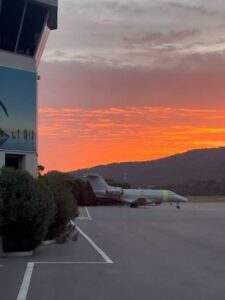
There is essentially one FBO at La Môle — Sky Valet Saint-Tropez — and they have been the dedicated FBO operator on the field for over a decade. They run the VIP terminal, handle the aircraft on the ramp, and coordinate the noise and slot procedures with the airport authority.
What Sky Valet handles:
- Aircraft handling — fueling, GPU, lav, water, baggage, line service
- Customs and immigration — coordinated airside, on call during the summer season for non-Schengen flights
- Passenger services — VIP lounge with Wi-Fi, refreshments, concierge
- Crew services — rest area, flight planning, weather, transport
- Ground transport coordination — cars, helicopters, marina transfers
- Catering — can deliver same-day from local providers; the FBO has a relationship with the better Riviera caterers
What you actually experience: A typical arrival at La Môle in July looks like this. Your driver drops you at the Sky Valet terminal, which is small, modern, and discreet. You clear any formalities inside (5–10 minutes for Schengen, longer for non-Schengen). Your luggage is brought to the vehicle directly. You are driving toward Saint-Tropez within 20–30 minutes of stepping off the aircraft.
For departures, the same terminal handles your pre-flight, your crew brief, and your wait. The lounge is small enough that you will almost certainly see other travelers, but the service standard is high and the privacy is reasonable for a destination of this kind.
The critical thing to understand is that Sky Valet La Môle is a small, seasonal operation. The team is experienced, the service is excellent, but the throughput in peak weeks is tight. If you want anything specific — particular catering, a particular ground operator, a particular concierge request — communicate it at booking, not at the door.
5. The Calendar: When to Fly, When to Avoid
Saint-Tropez is a summer destination. The private aviation calendar has very clear peak and shoulder periods.
Peak Season (Late June – Late August)
The six-week peak. Pricing is at the top of the market, slots at La Môle are tightest, and the demand for cars, restaurants, and marina berths is at its highest. The peak of the peak is mid-July to mid-August, when the Russian, Gulf, and ultra-high-net-worth European principals all overlap. Book four to six weeks ahead for a weekend in this window.
Shoulder Season (May, June, September, Early October)
The smart money flies here. May brings the parallel Cannes Film Festival spike — many Cannes-goers base themselves in Saint-Tropez for the privacy. June is warm, the events calendar is starting, and the restaurants are accessible. September is when Les Voiles de Saint-Tropez runs (the legendary end-of-season regatta), and it is widely considered the best month of the year in Saint-Tropez — the weather is still warm, the light is softer, and the crowds thin after the August break.
Off-Season (November – April)
Saint-Tropez in winter is a different destination. Most of the restaurants close, the beach clubs are dismantled, the harbor empties. The year-round residents stay, the cultural program in the village is quiet, and the surrounding hills are excellent for hiking and cycling. Private jet traffic drops by 90%+ versus summer. This is the right time for a long-stay at one of the year-round hotels — but it is not the Saint-Tropez that most visitors come for.
Major Events Driving Private Jet Traffic
- Cannes Film Festival (mid-May, ~12 days): Drives a parallel private jet spike into both Cannes-Mandelieu and Saint-Tropez. Many Cannes principals base themselves in Saint-Tropez for the privacy.
- Cannes Lions (mid-late June, ~7 days): The international advertising and creativity festival. Significant corporate and agency traffic into the Riviera.
- Les Voiles de Saint-Tropez (late September – early October, ~10 days): The end-of-season regatta, traditionally bringing together the largest gathering of classic and modern sailing yachts in the Mediterranean. One of the highest-demand private jet weeks of the year.
- Summer holidays (July – August): The general European high season, plus the international high-net-worth migration. The August 15 (Assomption) weekend in particular is a high-demand spike.
- Brand launches and corporate retreats: Pampelonne beach clubs and hotel properties are used for major launches throughout the summer; traffic spikes around specific announcements.
Best Days to Fly (for cost and availability)
Tuesday, Wednesday, Thursday — always. The weekenders fly Friday in, Sunday out, and these slots are the first to fill. Midweek in July and August is often available within two to three weeks; weekend flights need four to six.
Time of day matters as much as day of week. Because of the noise quotas at La Môle, morning arrivals (08:00–11:00) and late-afternoon arrivals (16:00–19:00) are the only reliable windows. Midday operations are constrained. Plan your entire trip around the slot, not the other way around.
6. The Real Cost of Renting a Private Jet to Saint-Tropez
Saint-Tropez pricing is the most volatile in the European summer market because the airport is so constrained. A round trip from London in late July can be 40–60% above the same trip in mid-May.
Indicative One-Way Charter Prices (2026)
| Departure City | Flight Time | Light Jet | Midsize | Super-Midsize | Heavy / ULR |
|---|---|---|---|---|---|
| London (Farnborough / Biggin Hill) | 2h 00 | €8,000 – €12,000 | €14,000 | €18,000 | €22,000 – €35,000 |
| Paris (Le Bourget) | 1h 20 | €6,000 – €9,000 | €9,500 | €13,000 | €15,000 – €24,000 |
| Geneva | 0h 55 | €4,800 – €6,500 | €7,500 | €10,500 | €12,000 – €19,000 |
| Zurich | 1h 00 | €5,200 – €7,000 | €8,000 | €11,500 | €13,000 – €20,000 |
| Milan | 0h 50 | €4,200 – €5,500 | €6,500 | €9,000 | €10,500 – €17,000 |
| Munich | 1h 15 | €5,800 – €7,500 | €9,000 | €13,000 | €14,500 – €23,000 |
| New York | ~7h 30 | — | — | — | €85,000 – €140,000 |
These are all-in one-way numbers including handling, FBO fees, fuel, crew, and catering. The short regional hops from Geneva, Zurich, and Milan are remarkably accessible — a one-way light jet from Milan to Saint-Tropez can land under €4,500 in shoulder season.
What’s Driving Cost in 2026
- Aircraft selection. The runway constraint at La Môle is a market force, not just a technical limit. Midsize and super-midsize jets that physically cannot land at La Môle are forced to use Nice or Cannes, which adds either a helicopter transfer (€1,500–€2,500) or a 1h 30m car transfer. Operators that base a Phenom 300 or Citation CJ3 at La Môle have a structural advantage on the cost.
- Fuel. Mediterranean Jet-A pricing has been more stable in 2025–2026 than 2022–2023 but is still the single largest variable cost.
- Handling. The Sky Valet handling fee at La Môle is reasonable — typically €400–€1,500 depending on aircraft and services. Nice and Cannes handling is comparable.
- Helicopter transfer. The most common hidden cost. If you land a heavy or super-midsize at Nice, the helicopter hop to Saint-Tropez is €1,500–€2,500 per flight, per helicopter. For a group of four, that is meaningful.
- Catering on board. Allow €150–€500 per person for proper Riviera catering.
- Ground transport in Saint-Tropez. A chauffeured Mercedes V-Class or Range Rover for a day runs €600–€1,200. A 7-series BMW or equivalent for a week is €3,000–€5,000 all-in.
- Marina fees. Berthage at the Vieux Port for a 30-meter yacht in August can run €1,800–€3,500 per night. Larger yachts scale accordingly.
- Hotel. The top hotels in Saint-Tropez in summer start at €1,800–€3,000 per night and rise quickly for the suites and villas that charter clients typically want.
The Peak Summer Surcharge
Charter pricing into the Riviera in July and August typically carries a 20–40% premium over shoulder. The premium reflects (a) demand, (b) limited aircraft repositioning options, and (c) the operational complexity of La Môle in peak. If your dates are flexible, mid-September or late May is 20–35% cheaper for the same aircraft on the same route.
What’s Not in the Headline Price
- Saint-Tropez tourist tax. The French taxe de séjour is applied to hotel stays (typically €1.50–€5 per person per night depending on the property classification).
- Marina mooring fees. Yachts at Vieux Port pay a separate daily mooring fee.
- Beach club minimum spends. A day at Club 55 or Bagatelle for a group of six to ten can run €1,500–€4,000 including food, drinks, and a minimum spend on daybeds or cabanas. These are not optional during peak season.
7. The Busiest Routes to Saint-Tropez
The Riviera is the most concentrated private aviation market in Europe, and Saint-Tropez sits at the center of the densest part of it.
United Kingdom → Saint-Tropez
The single largest source market. The route is the workhorse of the European private aviation industry. Departure airports are London Farnborough (FAB), Biggin Hill (BQH), Luton (LTN), Stansted (STN), and increasingly Battersea (a 2024 opening) and the smaller private strips of southern England. One-way pricing on a light jet starts around €8,000 in shoulder, €10,000–€12,000 in peak. Midsize starts around €14,000. Heavy €22,000+.
France → Saint-Tropez
The Paris–Saint-Tropez route is one of the iconic private aviation corridors in the world. Paris Le Bourget (LBG) and increasingly Paris Issy-les-Moulineaux (where the long-anticipated urban heliport is in development) are the main departure points. One-way light jet pricing starts around €6,000 in shoulder, €7,500–€9,000 in peak. A short 1h 20m hop on a Citation Mustang, this is the densest single route in the French charter market.
Switzerland → Saint-Tropez
Geneva (GVA), Zürich (ZRH), and Sion (SIR) are the main feeders. The Geneva–Saint-Tropez route is a 55-minute flight on a Phenom 300, often €4,800–€6,500 one-way on a light jet. Strong corporate and family office traffic. The Zurich feeder is slightly longer (1h) and slightly more expensive.
Italy & the Eastern Mediterranean
Milan Malpensa, Milan Linate, and Rome Ciampino all feed Saint-Tropez directly, often on Phenom 300s and Citation CJ3s on the 50-minute Milan hop. The Italian demand is significant and growing — the proximity and the cultural fit make Saint-Tropez a natural destination for the Italian UHNW market.
Germany → Saint-Tropez
Munich, Frankfurt, Hamburg, and Düsseldorf are the main German departure points. The route is dominated by midsize and super-midsize, with heavy jets common in July and August. Munich–Saint-Tropez starts around €5,800 on a light jet.
Russia & the CIS (Historically)
Russian private jet traffic to Saint-Tropez was, for many years, a major share of the market. Pre-2022, the La Môle and Cannes-Mandelieu ramps were visibly dominated by Russian-registered aircraft. Since 2022, the EU airspace closure to Russian-registered aircraft, the fleet seizures, and the broader sanctions regime have reduced this traffic to a small fraction of its prior scale. The capacity has been substantially absorbed by additional Turkish, Kazakh, UAE, and US-registered traffic, but the social composition of the season has changed.
Transatlantic & Long-Haul
Saint-Tropez is a small destination by long-haul private jet standards, but it can handle the largest aircraft at Nice (and the major long-haul customers all fly into Nice, not La Môle). New York, Miami, Los Angeles, São Paulo, and Dubai all generate long-haul private jet traffic to the Riviera in summer. New York–Saint-Tropez on a heavy jet is typically €85,000–€140,000 one-way, with the helicopter transfer from Nice layered on top.
Intra-Riviera
The Nice–Saint-Tropez corridor is one of the most operationally interesting in European private aviation. Helicopter transfer (€1,500–€2,500, 15–25 minutes) is the standard, with several operators running scheduled services. Car transfer is 1h 30m to 2h. Light jet transfers are rare because the aircraft could have flown direct.
8. Saint-Tropez’s Luxury Ecosystem: Where to Stay and What to Do
The plane gets you there. The place is the point.
Where to Stay
The Iconic Five-Star Hotels
- Cheval Blanc St-Tropez — the LVMH property on the beach at Pampelonne, with the three-Michelin-starred La Vague d’Or restaurant under chef Arnaud Donckele. The benchmark of the Riviera. Peak summer suites run €6,000–€15,000 per night.
- Hôtel Byblos — in the village, with the legendary pool courtyard, the Rivea restaurant, and the Cipriani outpost next door. The original Saint-Tropez grand hotel. Suites €2,000–€6,000 per night in peak.
- Airelles Château de la Messardière — a hilltop estate above the bay, recently renovated under the Airelles brand. 103 rooms and suites, panoramic views, the Valmont spa. €2,500–€8,000 per night in peak.
- La Réserve Ramatuelle — Michel Reybier’s hotel above Pampelonne, the most contemporary of the top properties. Strong spa, strong food, the most private pool area of the major hotels. €2,500–€7,000 per night in peak.
- Hôtel Bastide de Saint-Tropez — a small, refined hotel walking distance from the village, with one of the best breakfasts on the peninsula.
The Boutique & Design Properties

- Hôtel Sezz Saint-Tropez — Christophe Pillet’s design hotel, a quiet contemporary alternative to the grand properties. The kind of place that doesn’t show up in glossy press but is the pick of many repeat visitors.
- Pan Deï Palais — a converted 1830s Indian palace in the village, eight suites, with one of the most distinctive hotel concepts in the Riviera.
- Villa Marie — a 19th-century villa on the hill above Pampelonne, 45 rooms, a Sibuet property. Quiet, romantic, with a strong restaurant.
- Hôtel de Paris Saint-Tropez — a small, design-led hotel in the village. Calmer than the Byblos, walking distance to everything.
The Luxury Villa Rental Market
Saint-Tropez has a substantial villa rental market, with a meaningful share of the top villas leased for the full summer season at prices ranging from €50,000 to €500,000+ per week. The agencies that specialize in this market — Sotheby’s International Realty, Knight Frank, Michaël Zingraf, Barnes, and a number of local specialists — maintain serious inventories and require booking 6–12 months ahead for the very top properties.
Where to Eat
Saint-Tropez’s restaurant scene is world-class but tightly concentrated. The current standouts:
- La Vague d’Or — at the Cheval Blanc, three Michelin stars under chef Arnaud Donckele. Widely considered one of the three or four best restaurants in France. Reservations book out months in advance; the table for the Saturday evening seating in August is one of the hardest dinner reservations in the world.
- Le Café Sénéquier — the iconic harbor-front café, the most photographed address in Saint-Tropez. Not the food you fly in for, but the place you have to sit at least once.
- Club 55 — the original Pampelonne beach club, opened in 1955, still family-run. The Riviera institution.
- Bagatelle — the most lively of the Pampelonne beach clubs, with the full lunch-as-theater experience.
- Loulou — the newer Pampelonne club, opened in 2018, with the most contemporary crowd and the most aggressive table turnover.
- Indie Beach — at the quieter end of Pampelonne, more laid-back.
- L’Olivier — in the village, classic Provençal cuisine, a reliable anchor.
- Le Café des Arts — on the Place des Lices, the morning coffee and people-watching institution.
- Dior des Lices — the in-village restaurant at the new Dior Saint-Tropez boutique, the most-photographed lunch spot of the last two years.
The Beaches

Pampelonne Beach — the 5 km white-sand beach lined with the beach clubs, all of which are worth at least one visit. From east to west: Indie Beach (the most low-key), Loulou (the most contemporary), Bagatelle (the most theatrical), Club 55 (the original), Verde, Nikki Beach (the most international crowd), and several smaller clubs.
Plage de Tahiti — at the western end of Pampelonne, more natural and less developed. The best swimming in the area.
Plage des Salins — north of Saint-Tropez, the local beach, the most authentic. Take lunch at Le Café at the back of the bay.
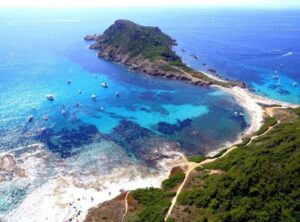
Plage de l’Escalet — the most rugged and beautiful of the small beaches at the end of the peninsula, with the Cap Camarat lighthouse above.
What to Do
- Yacht charter. Saint-Tropez is one of the great yacht charter destinations. The Vieux Port, Port Grimaud, and the Marines de Cogolin are the main hubs. A 25- to 40-meter motor yacht starts at €40,000–€90,000 per week in July, scale up for larger vessels.
- The Maupertuy trail. The most beautiful coastal walk on the peninsula, from the Plage de l’Escalet to the Cap Camarat lighthouse.
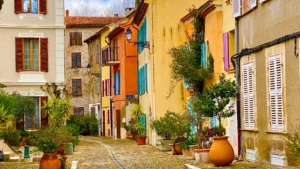
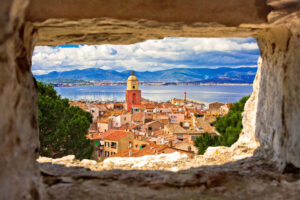
- The village itself. Walk it. The Place des Lices, the harbor, the citadel, the narrow streets. It is the densest concentration of fashion, art, and food in the Riviera.
- Cycling. The hills behind Saint-Tropez are serious cycling country, and you will see serious riders in the early mornings all summer.
- Tennis, padel, and the beach clubs. The Pampelonne clubs have their own sport facilities.
- Day trips to Cannes, Monaco, and the perched villages. Gassin, Ramatuelle, and Grimaud are the three most beautiful villages within an hour.
9. Practical Tips for First-Time Jet Renters Flying Into Saint-Tropez
The Saint-Tropez private jet experience is uniquely demanding. The following is what first-time customers need to know.
1. Choose your airport first, your aircraft second. Many first-time customers start by choosing an aircraft and assume La Môle will work. The right sequence is the opposite — decide on the airport based on your priorities (La Môle for direct access, Nice for larger aircraft with a helicopter transfer, Cannes for the middle ground), and then choose the aircraft that works for that airport.
2. PPR is required, no exceptions. All flights into La Môle require 24-hour prior permission. Your broker must submit the PPR request with the full aircraft, schedule, and operator details. Submitting late will get your slot denied.
3. Confirm the noise slot. Between May and October, the operating window is restricted to roughly 10:00–13:00 and 16:00–20:00. Midday operations are constrained. If your schedule requires a midday arrival, the operator may need to divert to Toulon for fuel. Build the slot into your trip plan, don’t try to fit your trip around it.
4. The aircraft you want may not be the aircraft you can use. The runway at La Môle rules out most heavy and super-midsize jets. If you have a strong preference for a specific cabin class, your broker needs to be honest about whether the aircraft can land where you want to land.
5. The helicopter transfer is part of the experience, not an optional add-on. If you land at Nice on a heavy jet, the helicopter transfer to Saint-Tropez (15–25 minutes, €1,500–€2,500) is the standard. Build it into the trip plan, the budget, and the schedule.
6. The Saint-Tropez FBO closes at sunset. Plan to be off the aircraft at La Môle well before 19:00 in summer. Late-night arrivals have to go to Nice or Cannes.
7. Customs at La Môle is seasonal. Non-Schengen flights (UK, Switzerland, US, Gulf) can only clear customs at La Môle between July 1 and October 15. Outside that window, the customs clearance happens at Nice. Plan accordingly.
8. Build a relationship with a Riviera-specialist broker or operator. If you fly into the Riviera more than twice a year, the difference between a generalist broker and a Riviera specialist is the difference between a smooth trip and a very expensive lesson. The local knowledge of which FBOs work in peak weeks, which pilots are La Môle-qualified, and which alternative airports are available when La Môle is closed is not optional.
9. Carry documents in advance. For non-EU customers, the FBO will need passport details for the crew and passengers in advance. Pets, weapons, unusual cargo — all of this needs to be communicated at booking, not at landing.
10. Don’t underestimate the marina. Vieux Port berthage in August is genuinely tight. If you are arriving with a yacht, your berth should be confirmed before you book the aircraft. If you are arriving without a yacht, the option of a day charter from one of the local operators (Burgess, Camper & Nicholsons, Fraser, Northrop & Johnson) is worth having in your back pocket.
11. The August 15 weekend is the single hardest week. If you must fly during the peak of the peak, build a 6-week booking lead. If you can shift to early July or late August, you will pay 20–30% less for the same aircraft and the operations will be smoother.
10. The Future of Private Aviation in Saint-Tropez
Several trends are worth tracking if Saint-Tropez is a recurring destination for you.
Sustainability pressure is real. France has been at the front of European environmental policy on aviation, including the implementation of the EU ETS scheme, ongoing debate about a French kerosene tax, and the gradual rollout of Sustainable Aviation Fuel (SAF) at major airports. The Riviera operations are still largely conventional fuel, but expect continued pressure to convert.
La Môle’s runway will not grow. The airport is constrained by terrain on both sides of the runway and by the residential and environmental sensitivity of the surrounding area. The 10,000-movement annual cap is unlikely to be lifted. As demand continues to grow, the constraint will bind harder, and the July-August premium will continue to widen.
Nice is becoming the de facto primary airport for the Riviera. For the customers who want larger aircraft, the helicopter transfer, or year-round non-Schengen arrivals, Nice absorbs an increasing share of the demand. Expect continued FBO and infrastructure investment at Nice to handle this.
Aircraft technology is changing what is possible. The new generation of light jets — the Embraer Phenom 300, the Cessna Citation CJ4 Gen3, the upcoming Bombardier Challenger 3500 in its short-field configuration — are opening up new options for La Môle. Pilots trained on the latest synthetic vision systems and short-field performance tools can land aircraft at La Môle that would have been marginal a decade ago.
Helicopter integration is improving. The scheduled Nice–Saint-Tropez helicopter services have been more reliable in the last two years than at any point in their history. The new operators coming into the market (Blade, the established European services) are making the air-to-yacht handoff more efficient.
Regulatory watch. France is currently implementing updated EU ETS rules for business aviation. Several municipalities along the Riviera are also tightening local rules on helicopter noise, particularly during evening hours. If you regularly arrive by helicopter, expect this to be an ongoing area of operational change.
11. The Bottom Line
Saint-Tropez is the most demanding short-haul private jet destination in the Mediterranean — and one of the most rewarding once you understand how to fly into it. The airport is small, the runway is short, the season is compressed, and the alternatives all involve trade-offs. But for the customers who can navigate this, the destination is unmatched in Europe for the combination of harbor, beach, and event density in a single small peninsula.
If you are chartering a private jet to Saint-Tropez for the first time, the path of least resistance is:
- Aircraft class: Turboprop or light jet for La Môle. Midsize or super-midsize for Cannes or Nice. Heavy or ultra-long-range for Nice with a helicopter transfer.
- Airport: La Môle for direct access if your aircraft can land there. Cannes-Mandelieu for a 1-hour ground transfer on a larger jet. Nice for the heaviest aircraft or for non-Schengen flights outside the July–October customs window.
- FBO: Sky Valet at La Môle. Multiple options at Nice. Limited but functional options at Cannes-Mandelieu.
- Broker: A Riviera-specialist operator or broker with specific La Môle experience. The difference in price between a broker who knows the airport and a generalist broker is often 20–30% in peak weeks.
- Timing: May, June, September, or early October if you can. Midweek if you can. Avoid the August 15 weekend if you can. Book 4–6 weeks ahead for a July or August weekend.
- Plan B: Have a fallback airport in mind. Cannes-Mandelieu is the practical answer. Nice is the bigger airport. Toulon is the year-round option.
The peninsula will deliver on the other end. Saint-Tropez in 2026 remains what it has been for sixty years — the most concentrated expression of the Riviera summer, with a private jet infrastructure that, while constrained, can support almost any customer willing to plan ahead.
The only constraint is the runway. Book early, pick the right aircraft, and have a fallback. The rest is one of the great private jet trips in the world.
This article is for informational purposes. Pricing, schedules, slot rules, and event dates reflect the most current data available as of August 2026 and are subject to change. For current charter quotes and slot availability, contact a Part 135 / EU OPS operator or a reputable European charter broker with Riviera experience.